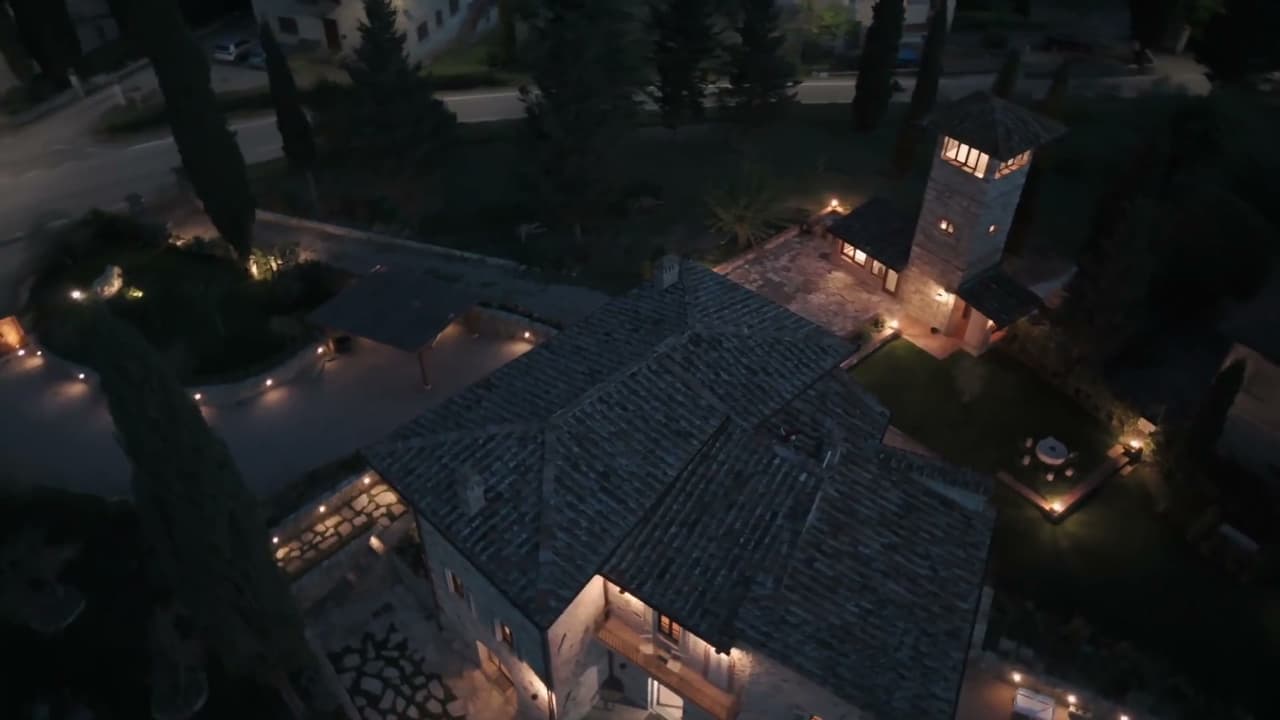
Radda in Chianti · Tuscany
Where the Swallows Return
Le Rondini, The Swallows, is a seventeenth-century sanctuary in the heart of Chianti Classico
Every spring the swallows cross the Sahara, the Mediterranean, the Apennines, drawn back to the same stone walls, the same old eaves, the same place they nested the year before. They know the scent of this hillside before they see it.
Le Rondini is named for these swallows and their return. For the pull of a place that, once known, is never quite left behind.
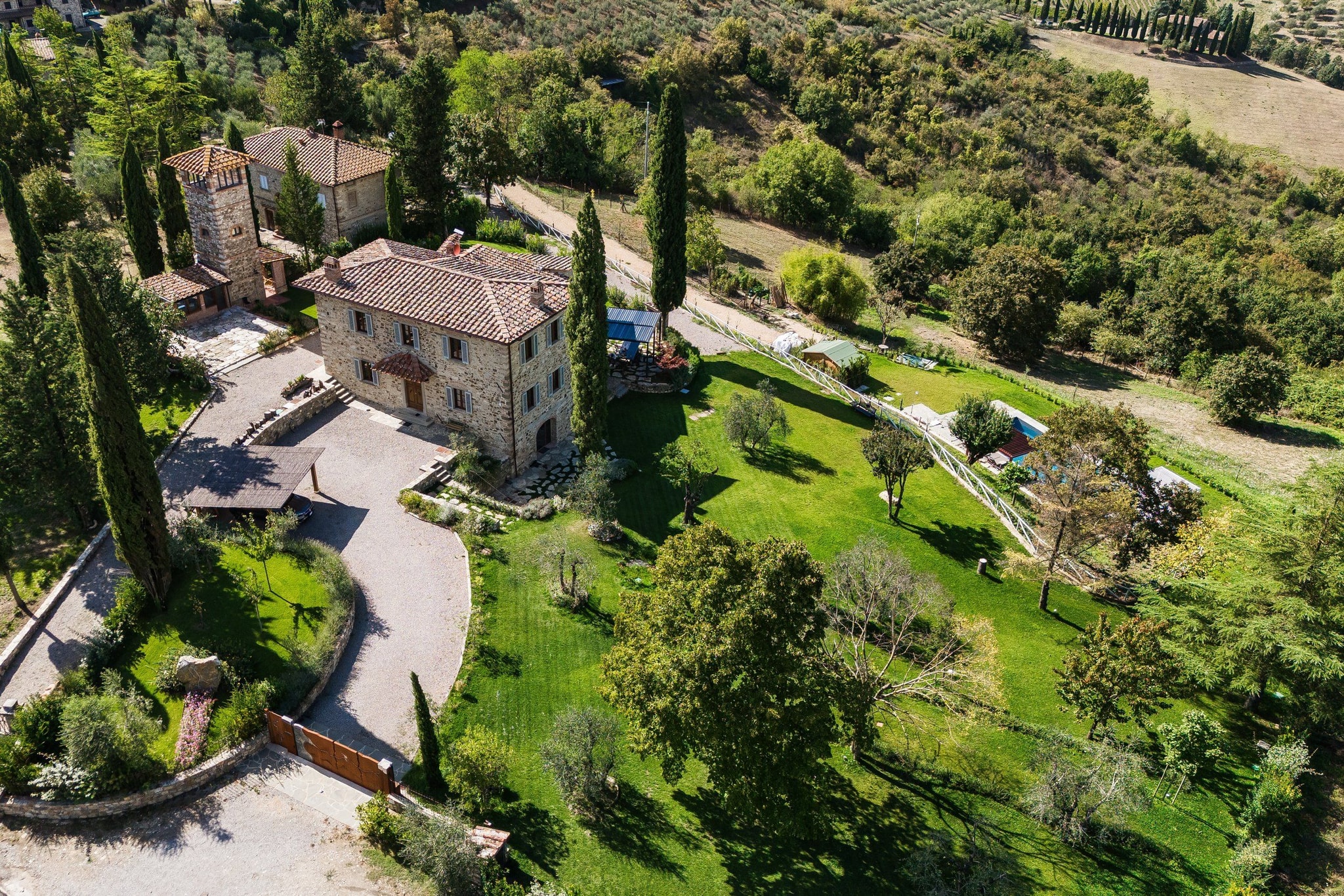
Five-minute walk from the medieval piazza of Radda in Chianti, the historic capital of the Chianti League since 1250, Le Rondini has stood on this ridge for four centuries.
A Thousand Years of This Hill
Radda first appears in the written record in 1003, named in an edict of Emperor Otto III. By 1250 it was the capital of the Lega del Chianti, the alliance that governed these hills for three centuries.
In the 1600s, a noble family built this house where you now stand. They gave it thick walls, a watchtower, and a cantina carved from the rock beneath. The swallows found it before anyone else did.
You are invited to be here when they do.
The Land
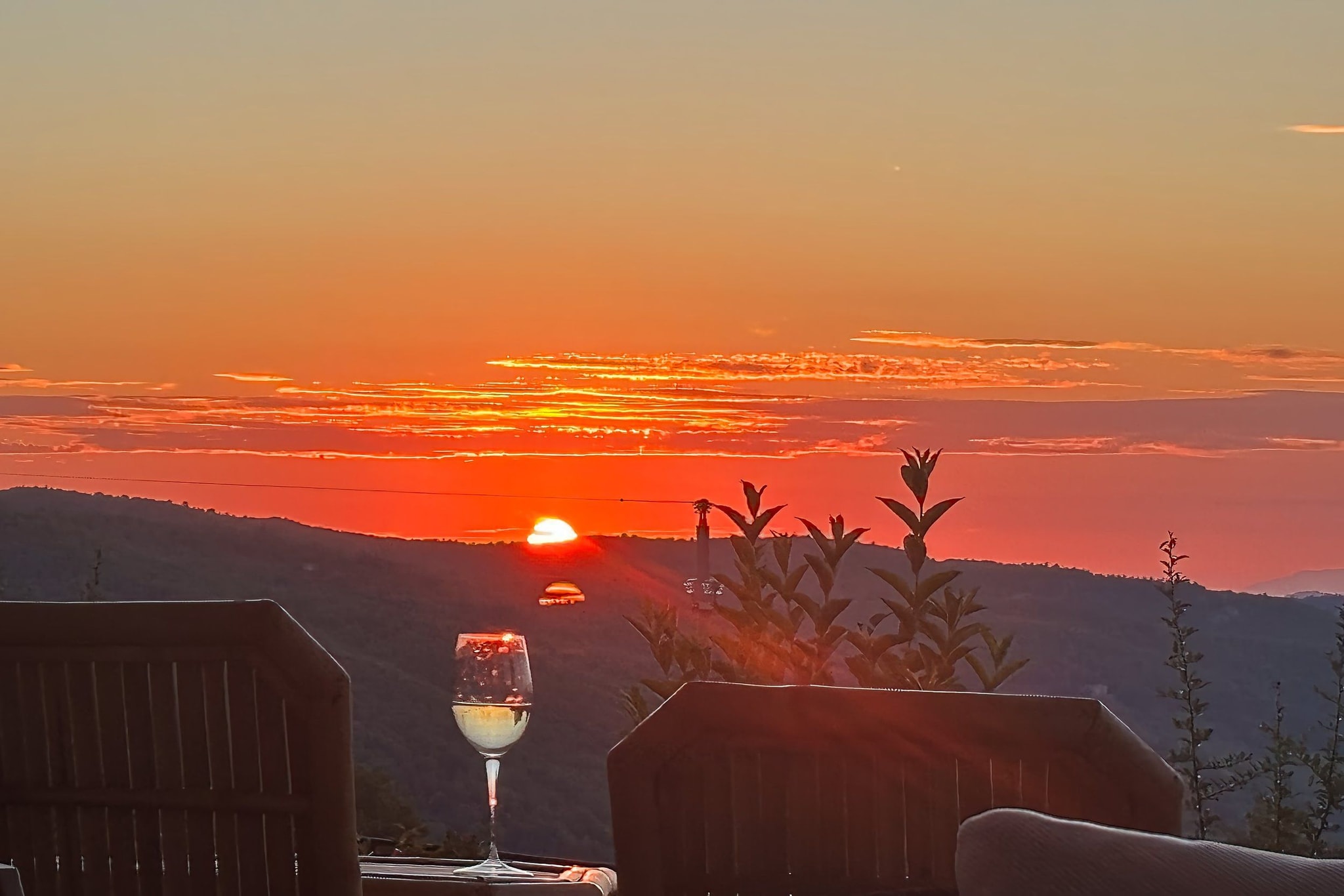
These hills have been cultivated for a thousand years. The same Sangiovese vines, the same olive groves, the same cypress along the old boundaries. Radda is the heart of Chianti Classico, the original zone, the only one permitted to carry the Gallo Nero on the label.
The Stone
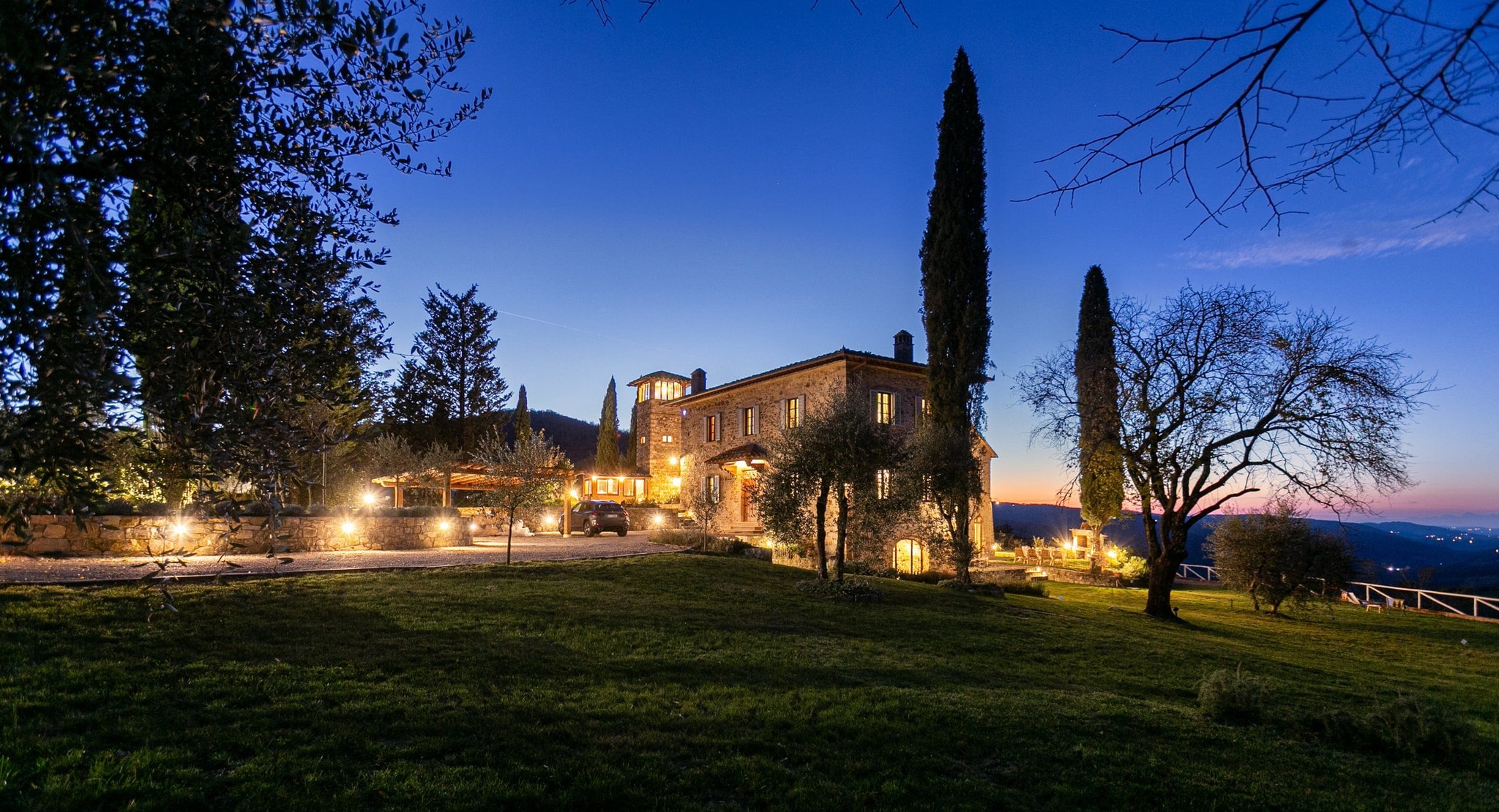
In the 1600s a noble family built this house with walls a metre thick, a watchtower above them, and a cantina cut from the rock beneath. Four centuries later it still stands. The quarrels of the Medici are long settled. The only thing arriving now is the sunset.
The Table
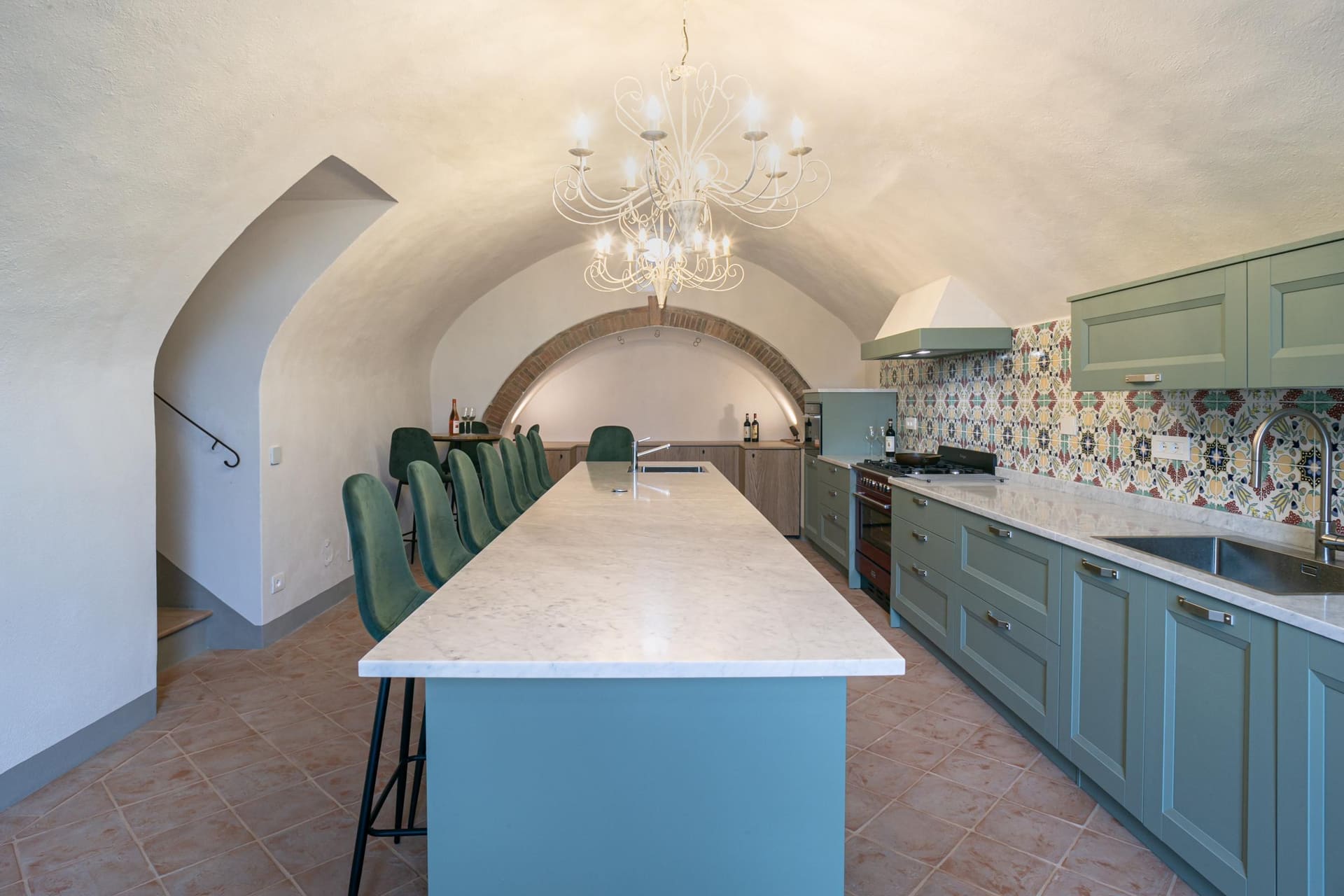
Rosemary from the garden. Salad and tomatoes from L'Orto, still warm, picked minutes before they reach the plate. Wine from La Cantina. Two kitchens, one grand and one everyday, and a rhythm of cooking that has not changed here for generations.
The Return
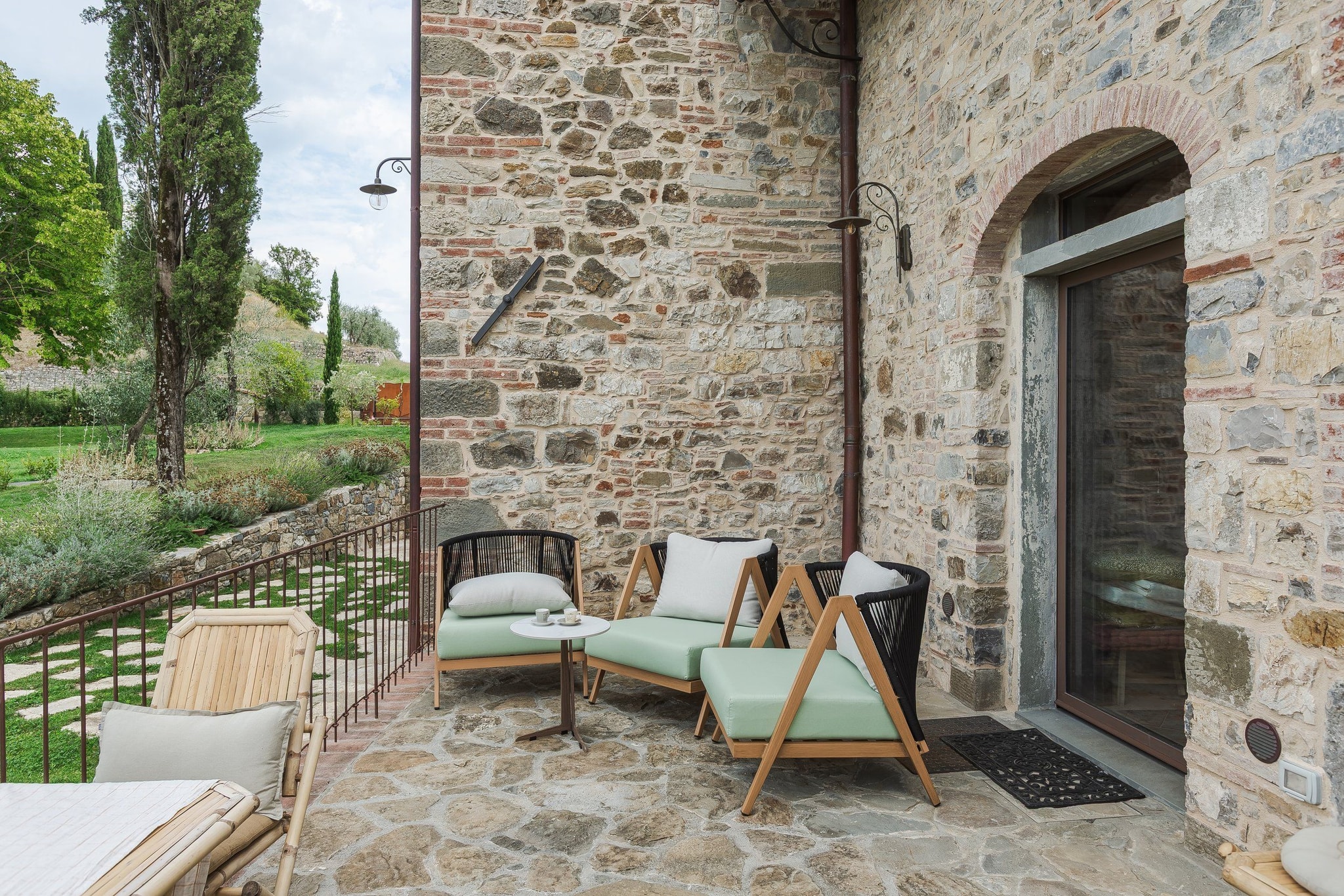
Guests come back. Drawn by the weight of afternoon light on terracotta, the silence between the cypress, the feeling of a place that was here long before you and will be here long after.
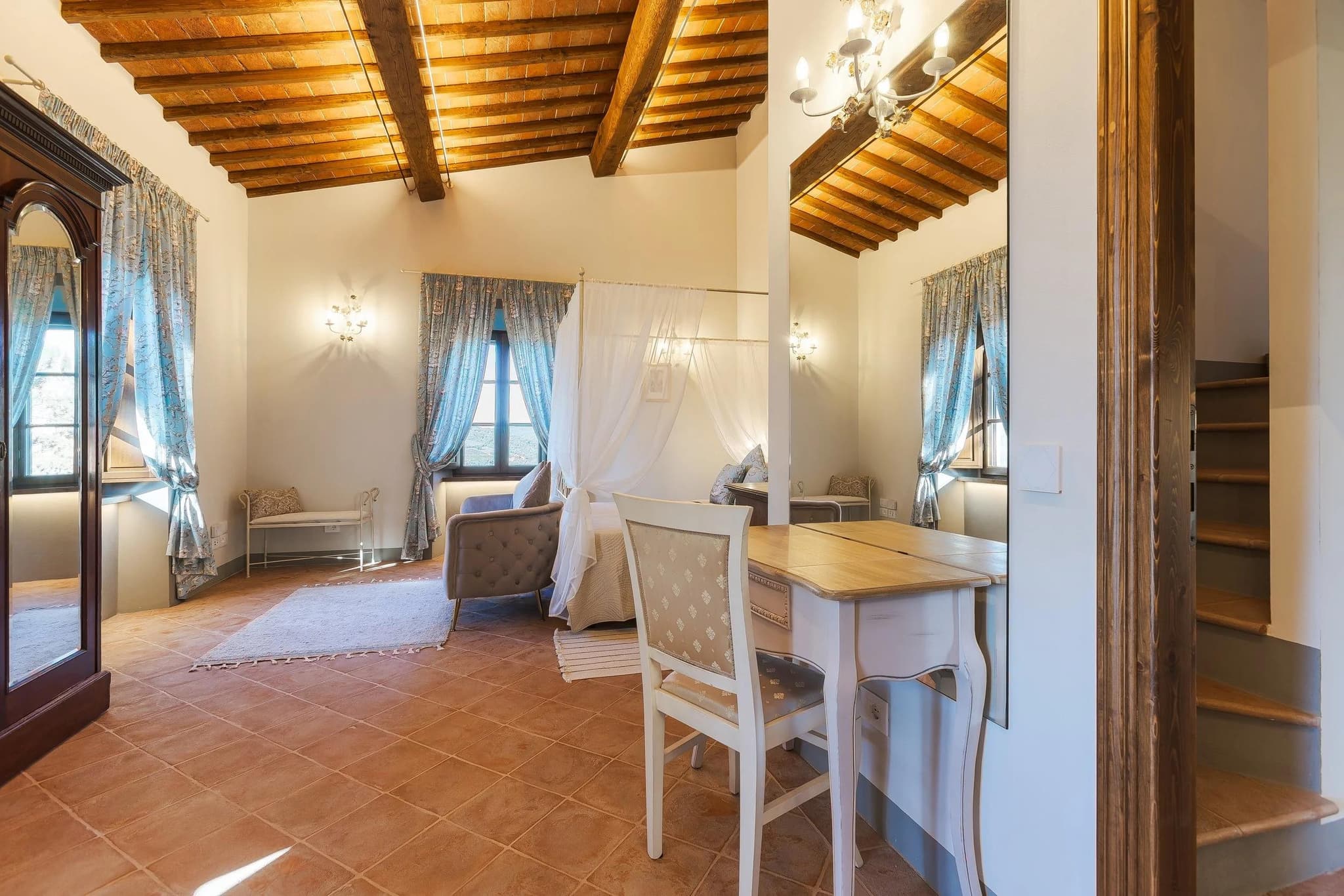
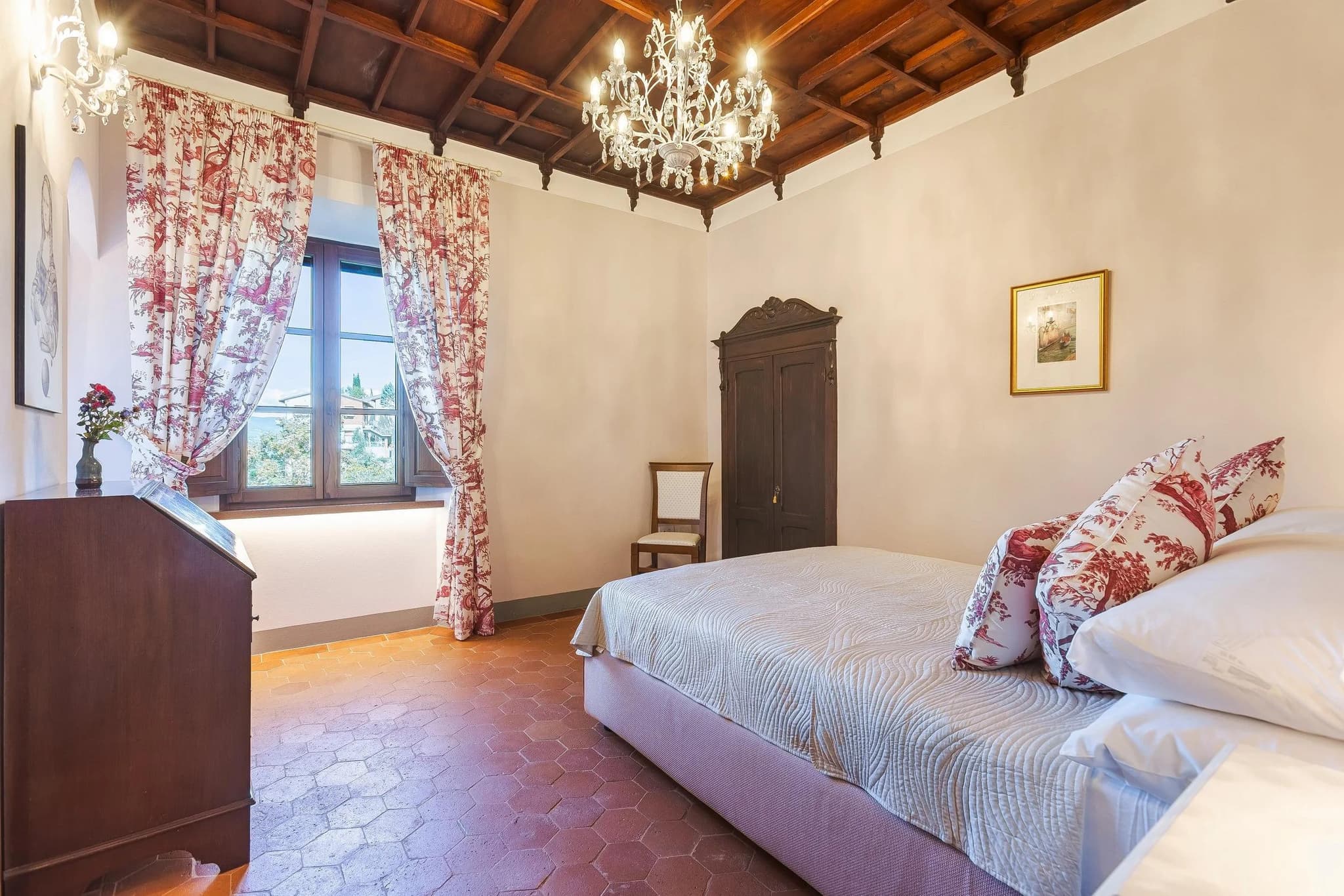
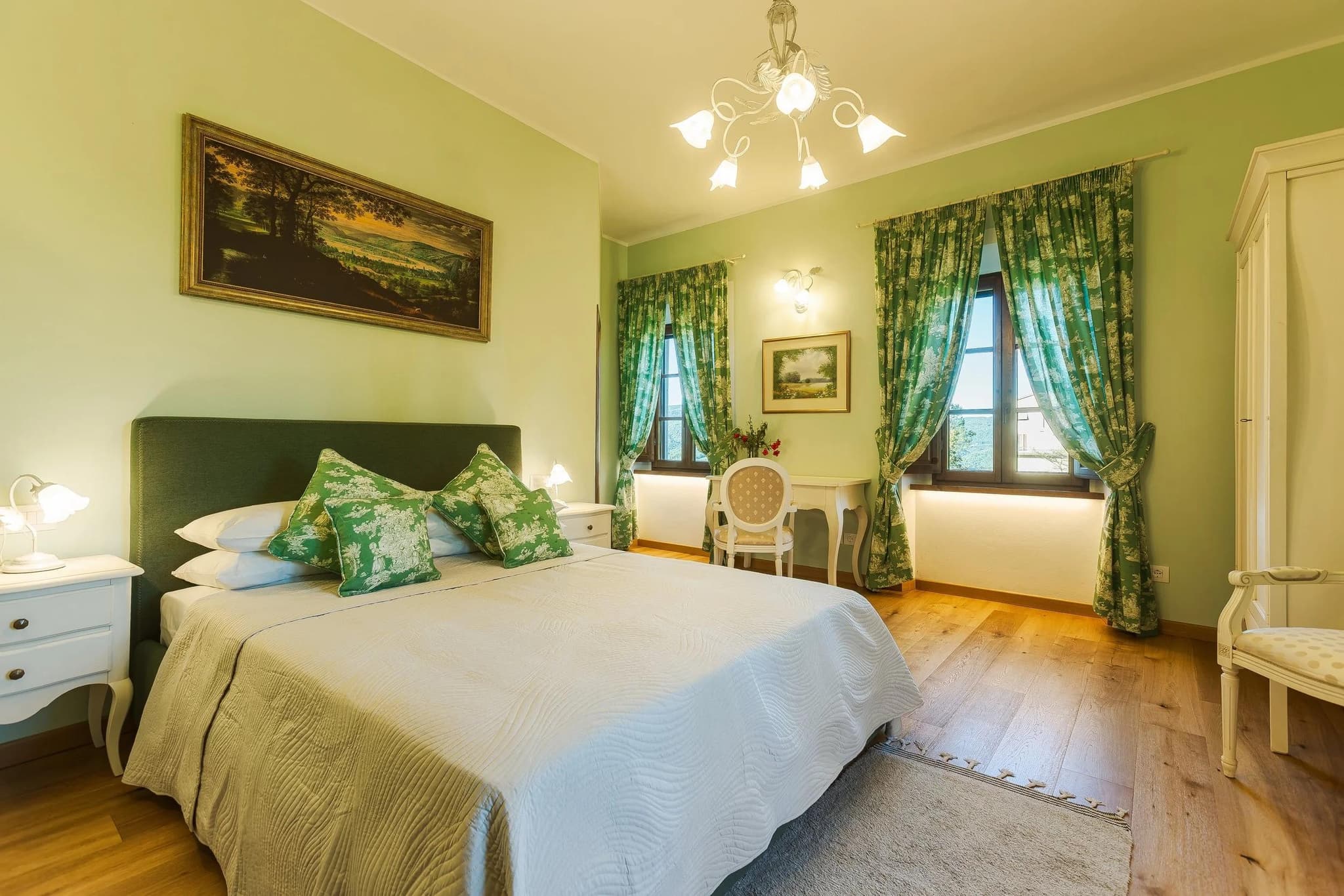
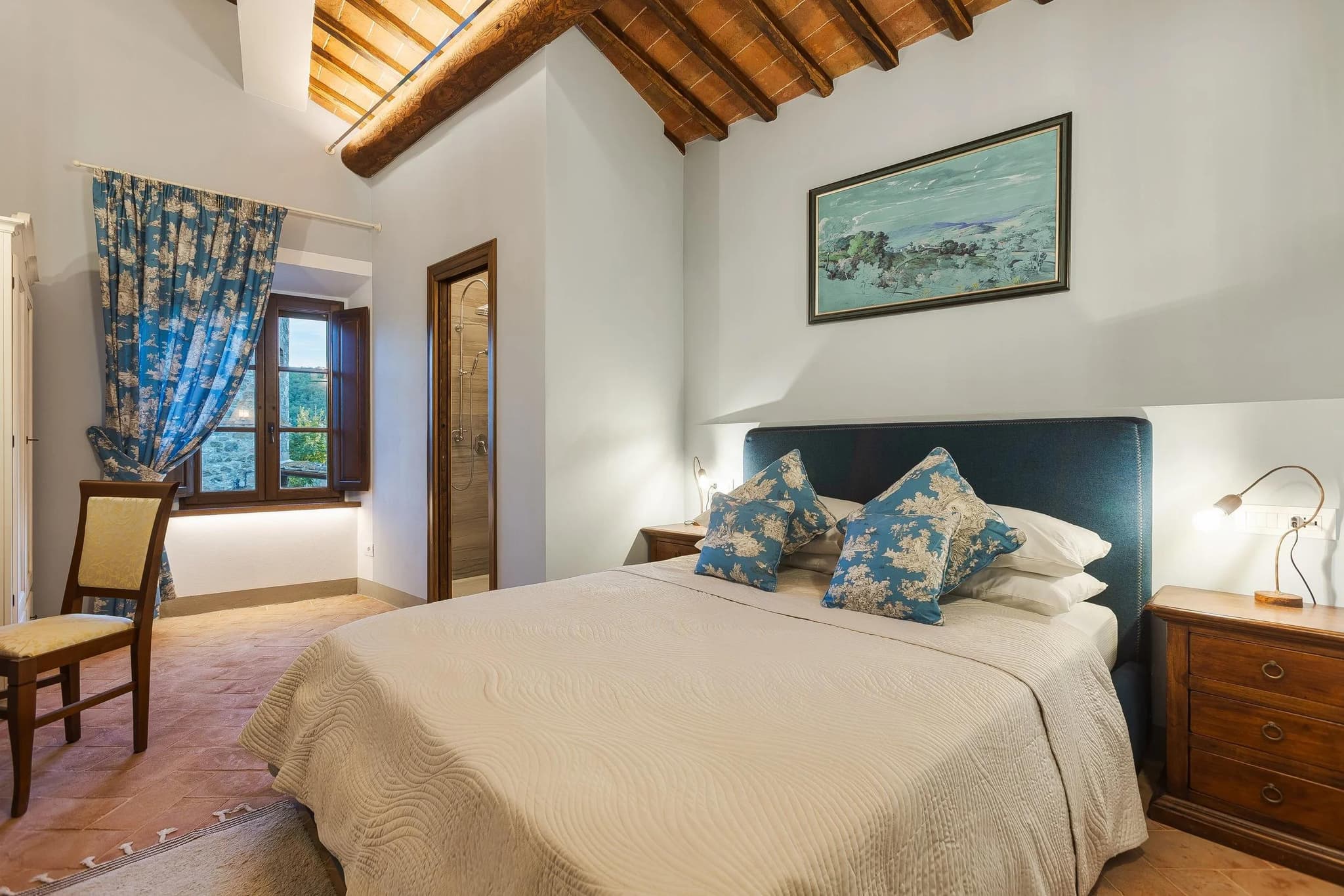
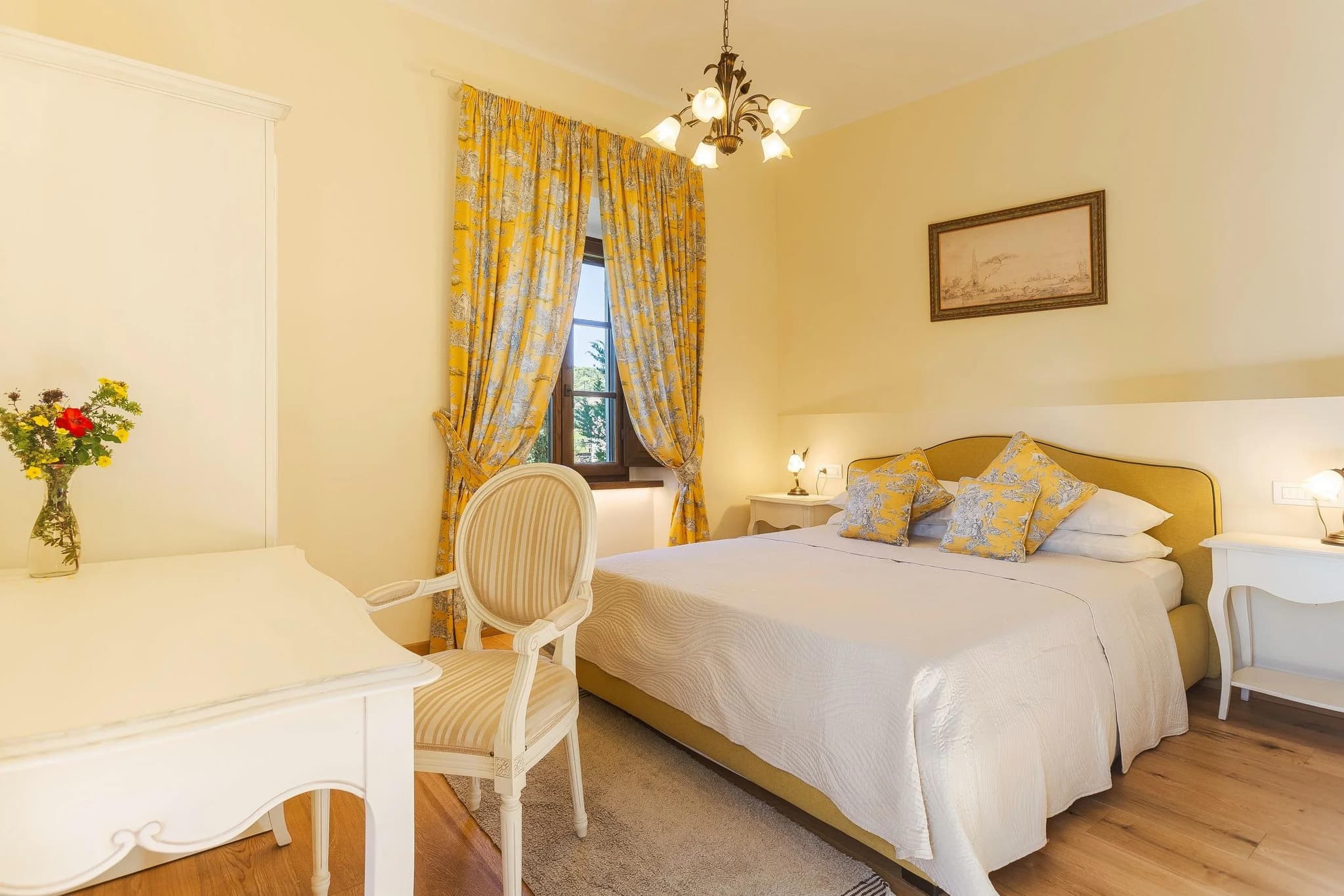
Each room is named for its colour. Each has its own view, its own light, its own quiet history within these ancient walls.
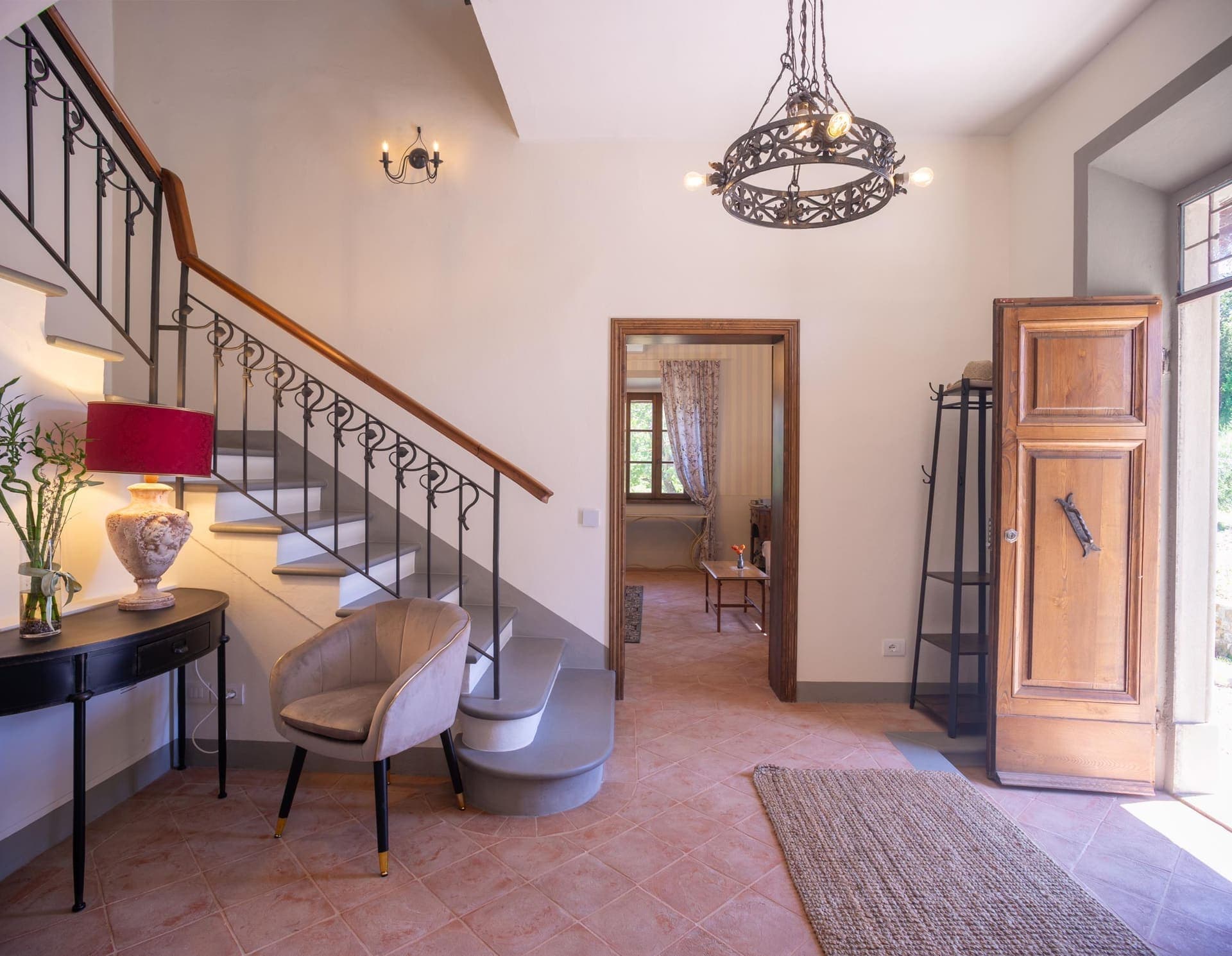
The Interiors
Four Centuries of Craft and Character
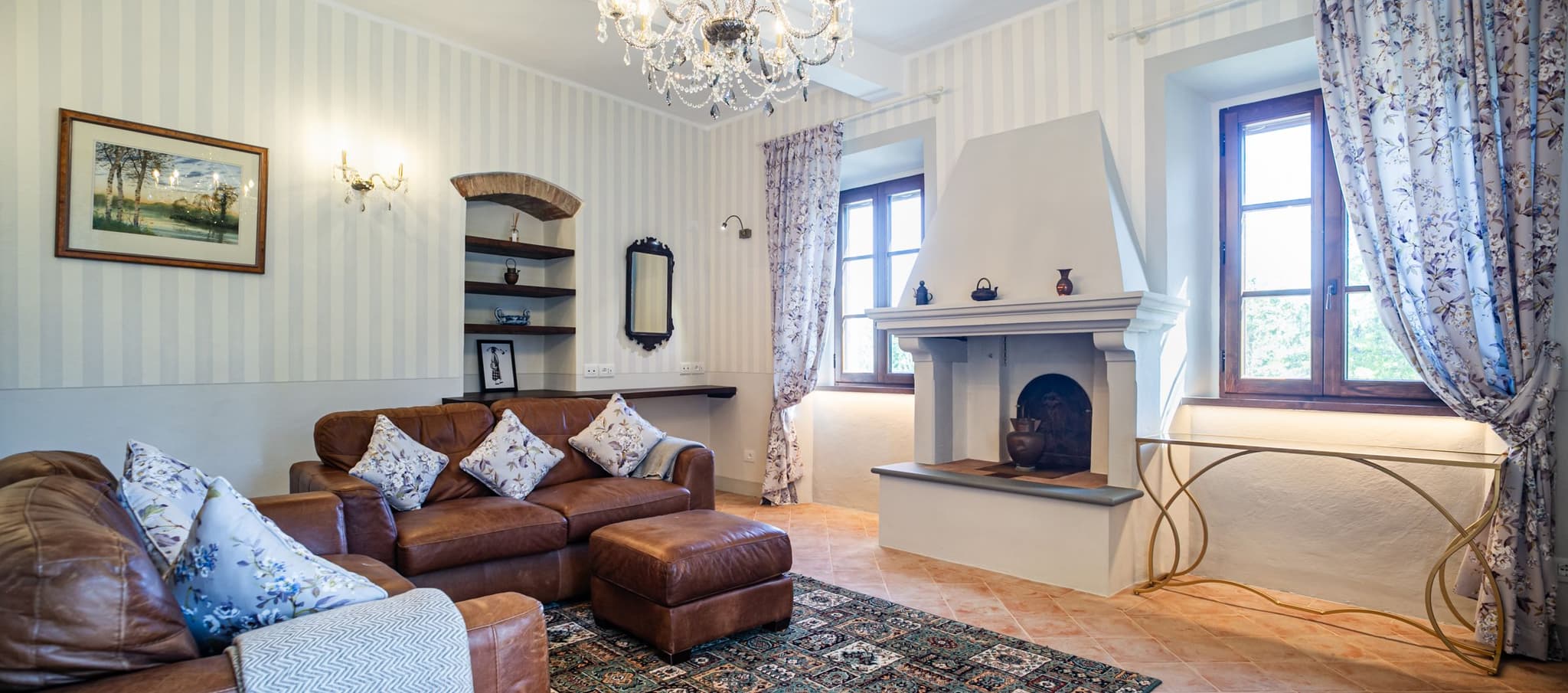
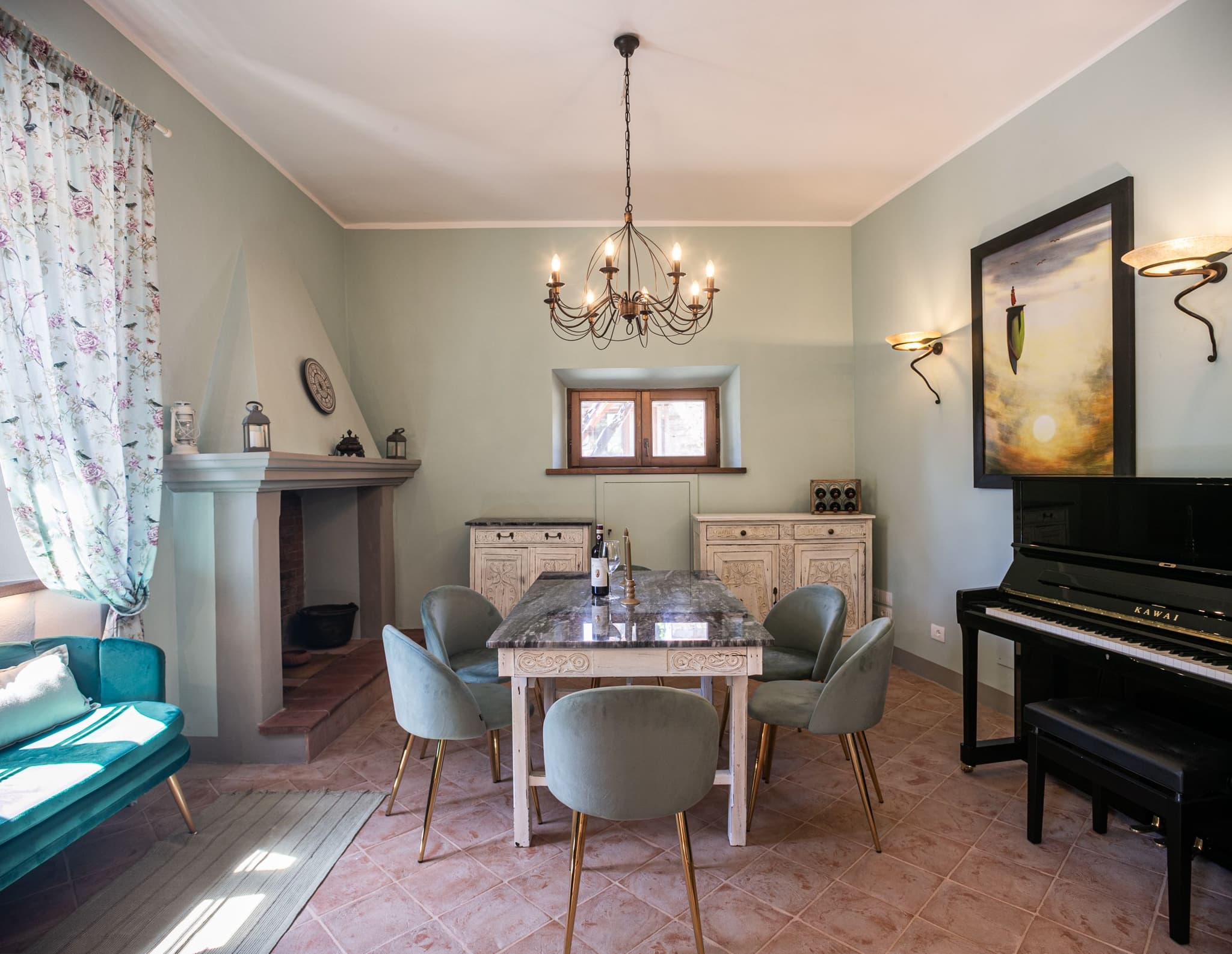
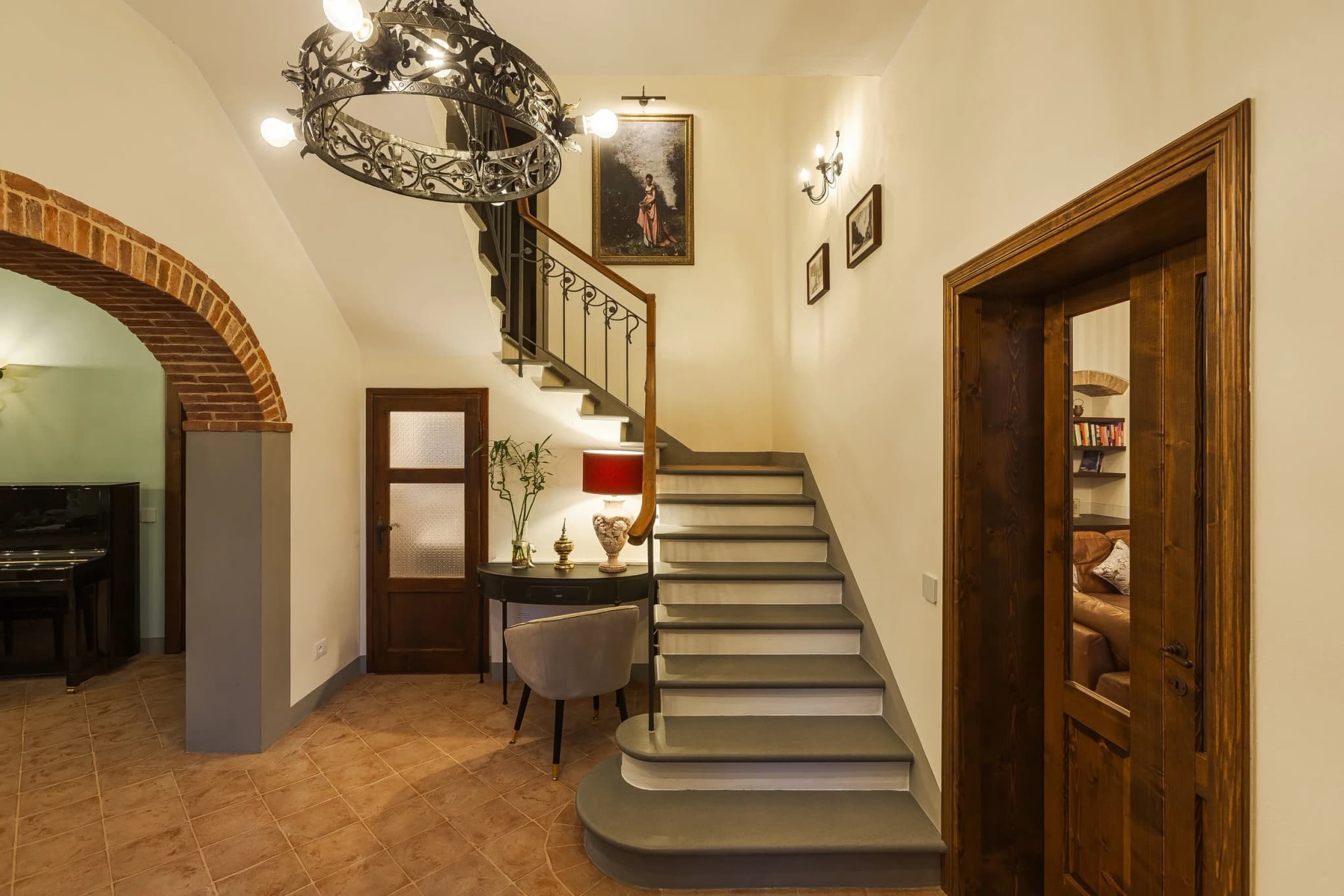
Pietra serena stone, hand-laid cotto floors, chestnut beams. Original details and careful restoration, in rooms made for living, not just looking.
Spring
The scent of wet earth and wisteria. The swallows arrive in early March. Irises bloom between the vines, poppies flood the meadows in April. Every morning something new has opened.
Summer
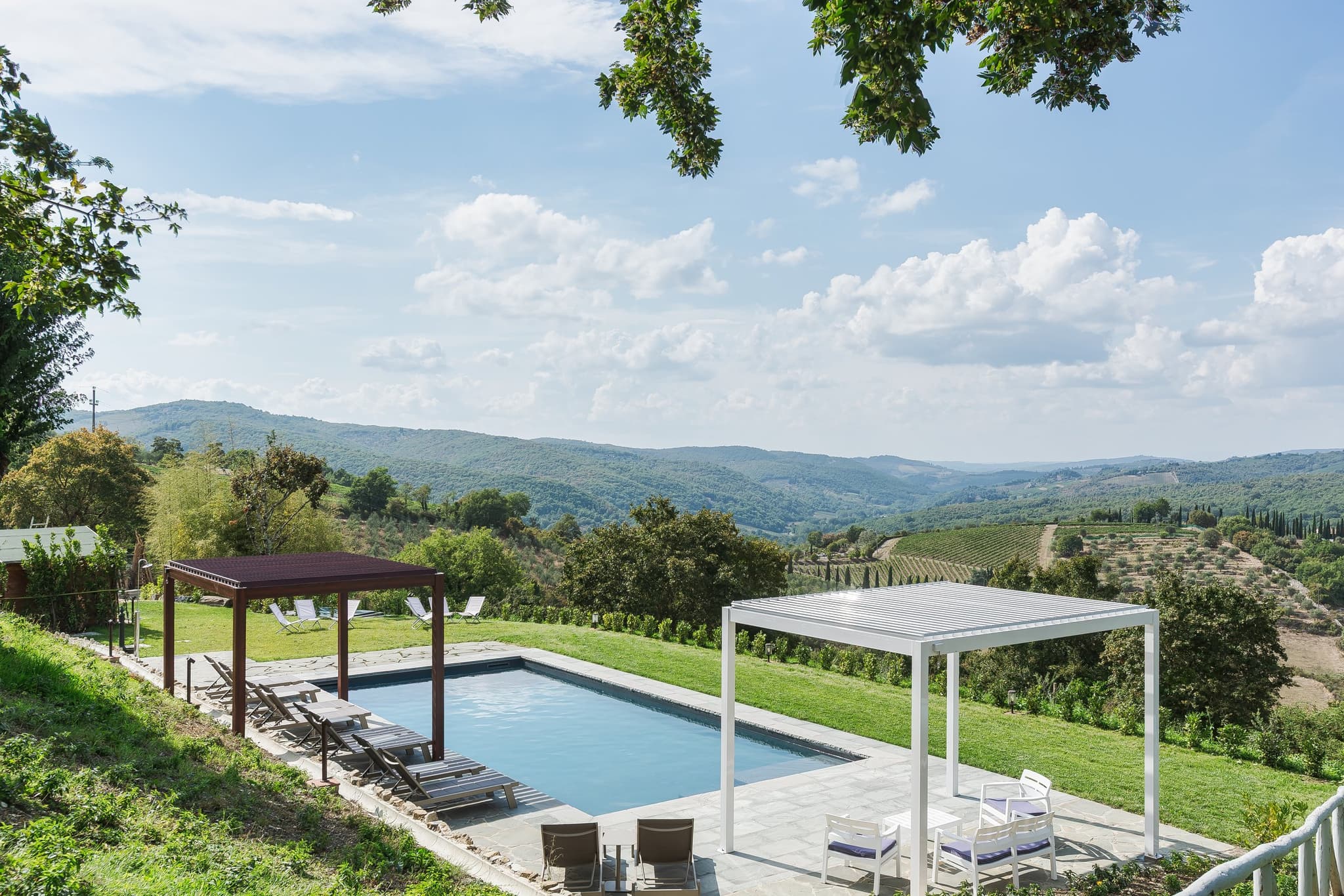
Cicadas define the sound, a wall of vibration that rises at noon and does not stop until dark. Dinner moves outside and stays there. The pool at dusk, when the surface catches fire. Starry nights so clear you stop talking and just look up.
Harvest
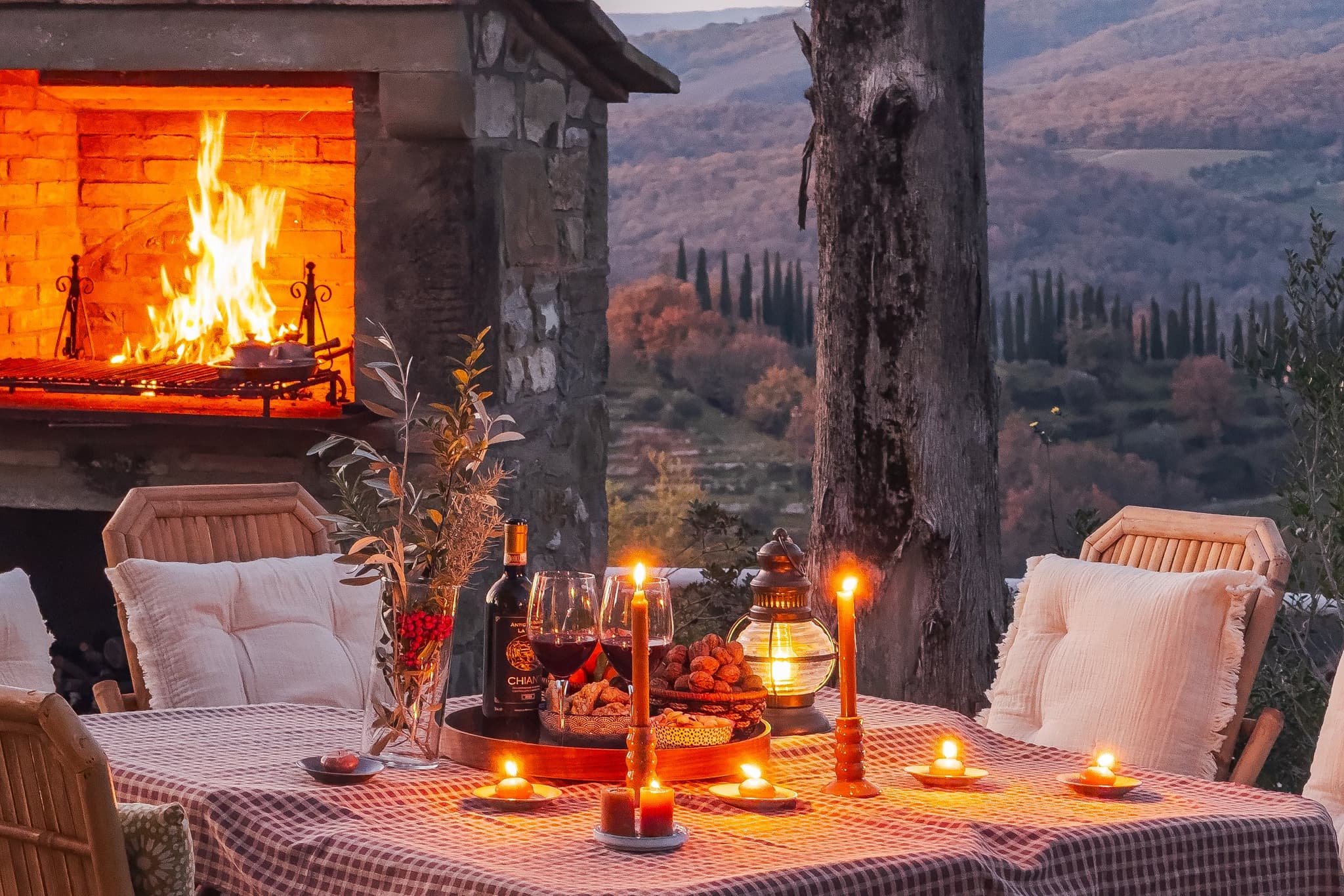
The scent of fermenting grapes hangs in the still air. La Vendemmia begins in mid-September, the picking, the pressing, the first taste of mosto. The olive harvest follows in late October. Ribollita returns to the table. The light turns amber.
Winter
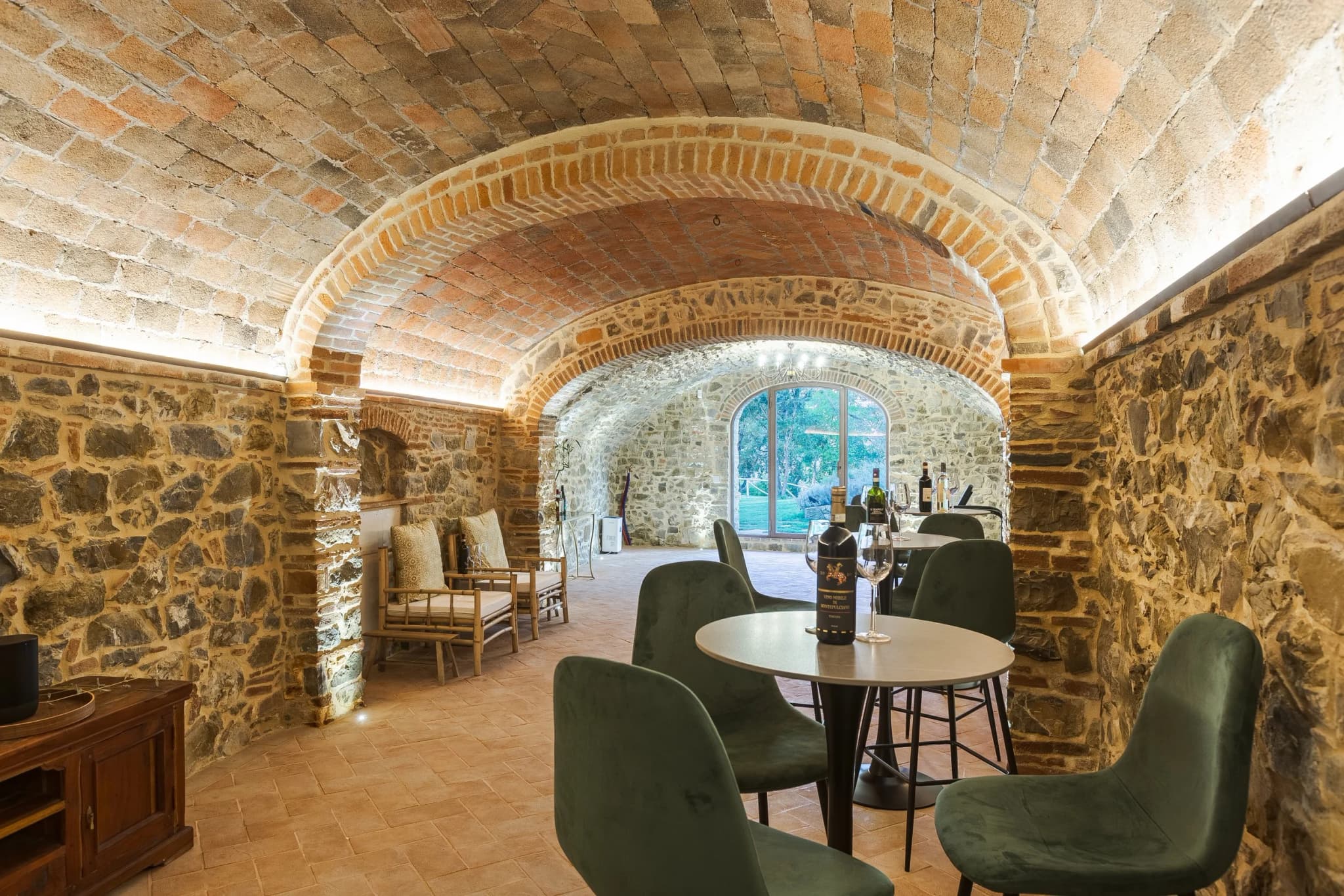
Near silence. The vineyards are bare, the earth resting. La Cantina feels most intimate now, candlelit and enclosed. Christmas and New Year are for family, the house full and the long table set. The rest of winter, it turns inward.
A Local Chef
Long lunches and slow dinners, cooked in the Grand Kitchen by a chef from the village. Tuscan classics and family style.
La Cantina
Arched stone, cool in any month. The enoteca in Radda and a neighbouring winery keep a selection down here, Chianti Classico from the hills you can see from the terrace.
Daily Housekeeping
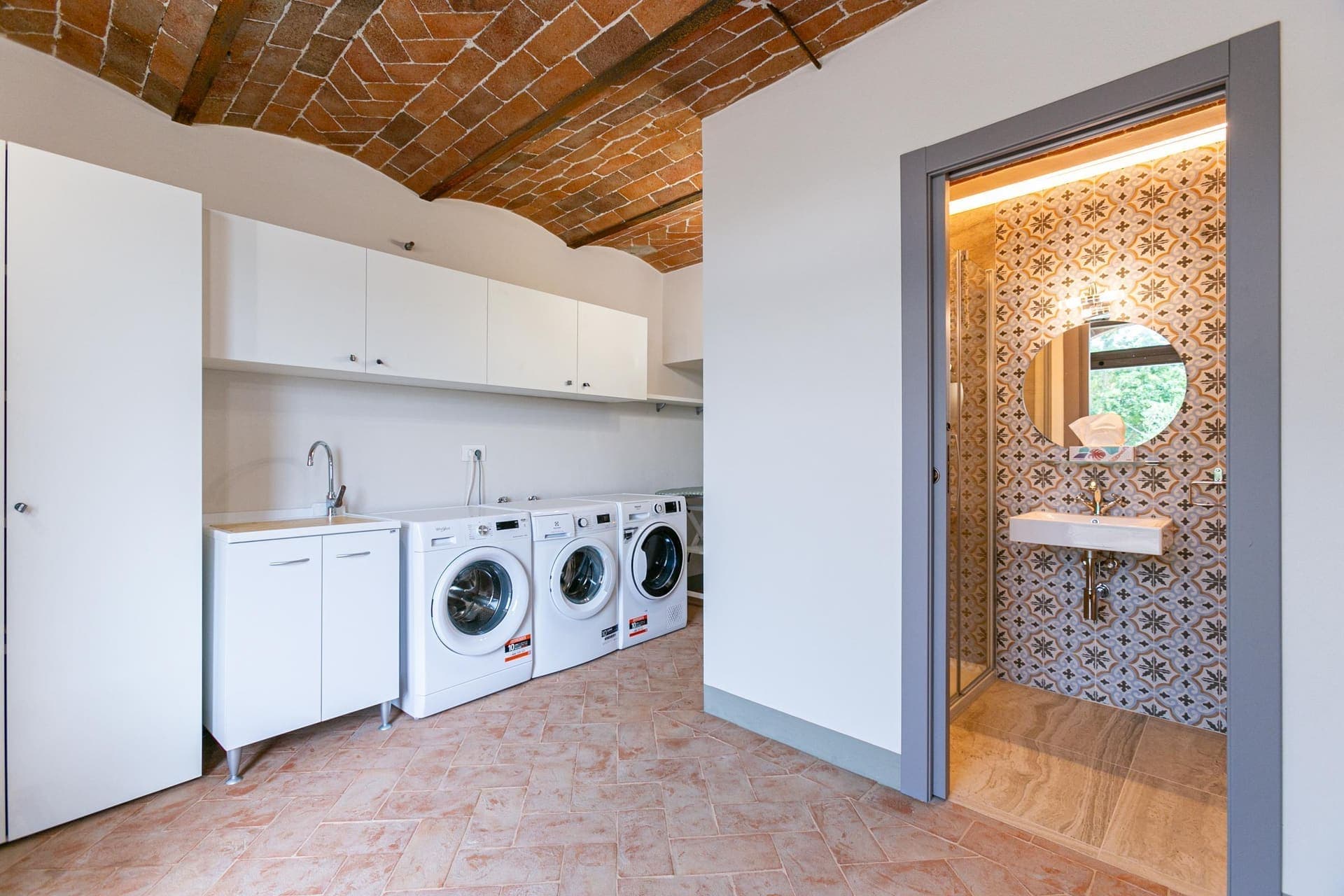
Beds made, rooms set right, the day begun without thinking about it. Five days a week, with a linen change each week,
Cooking Classes
Pasta rolled by hand at the marble island in the Grand Kitchen. Held with a local chef.
Siena & Florence
A driver and guide who know the quiet routes and the back entrances.
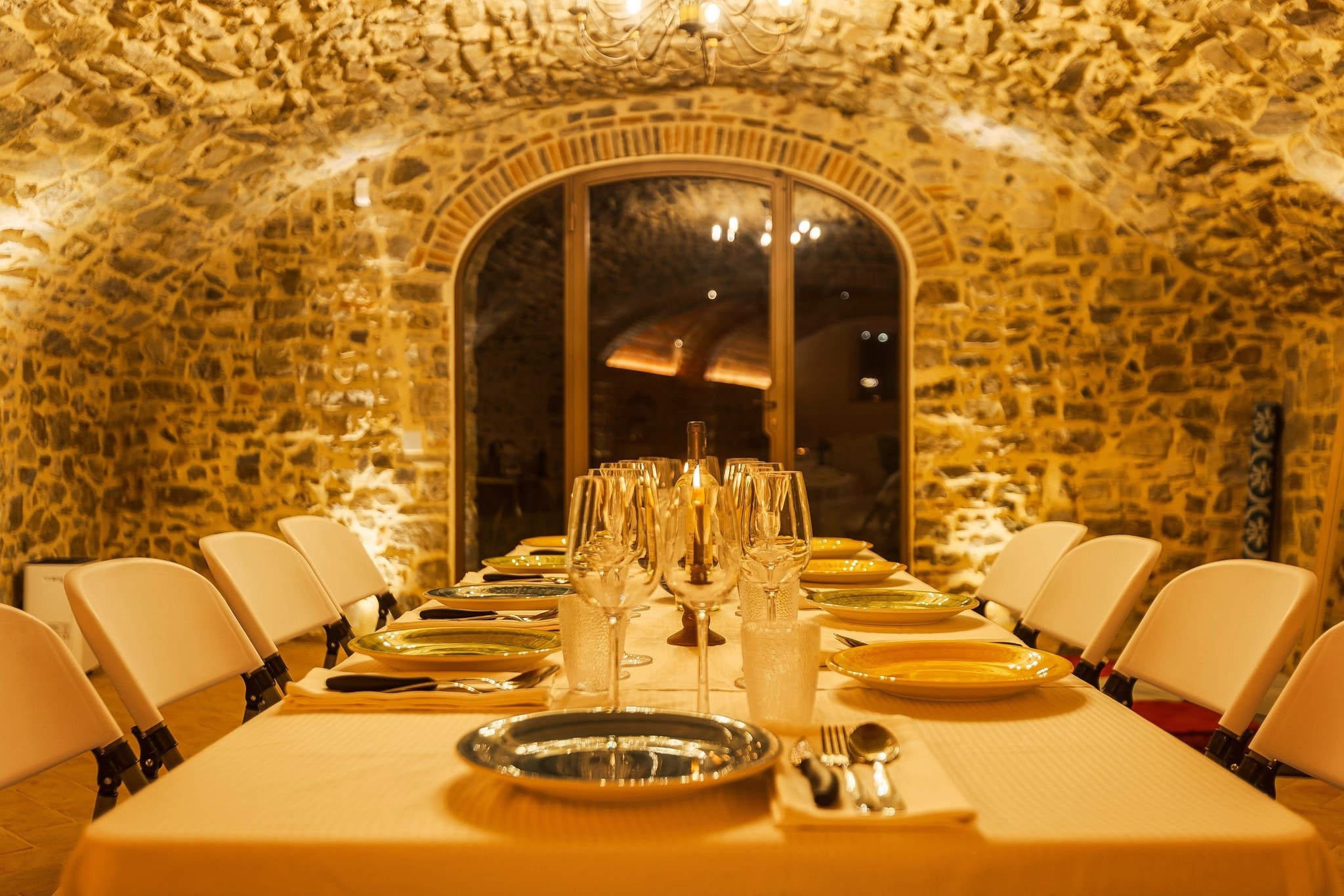
Beneath the villa, arched ceilings carry voices as they have for centuries. The original hollow where grapes were delivered is still visible - a window into the building's life as a working estate.
Today, La Cantina hosts private tastings, intimate dinners under stone, and evening concerts where the music resonates as it does nowhere else.
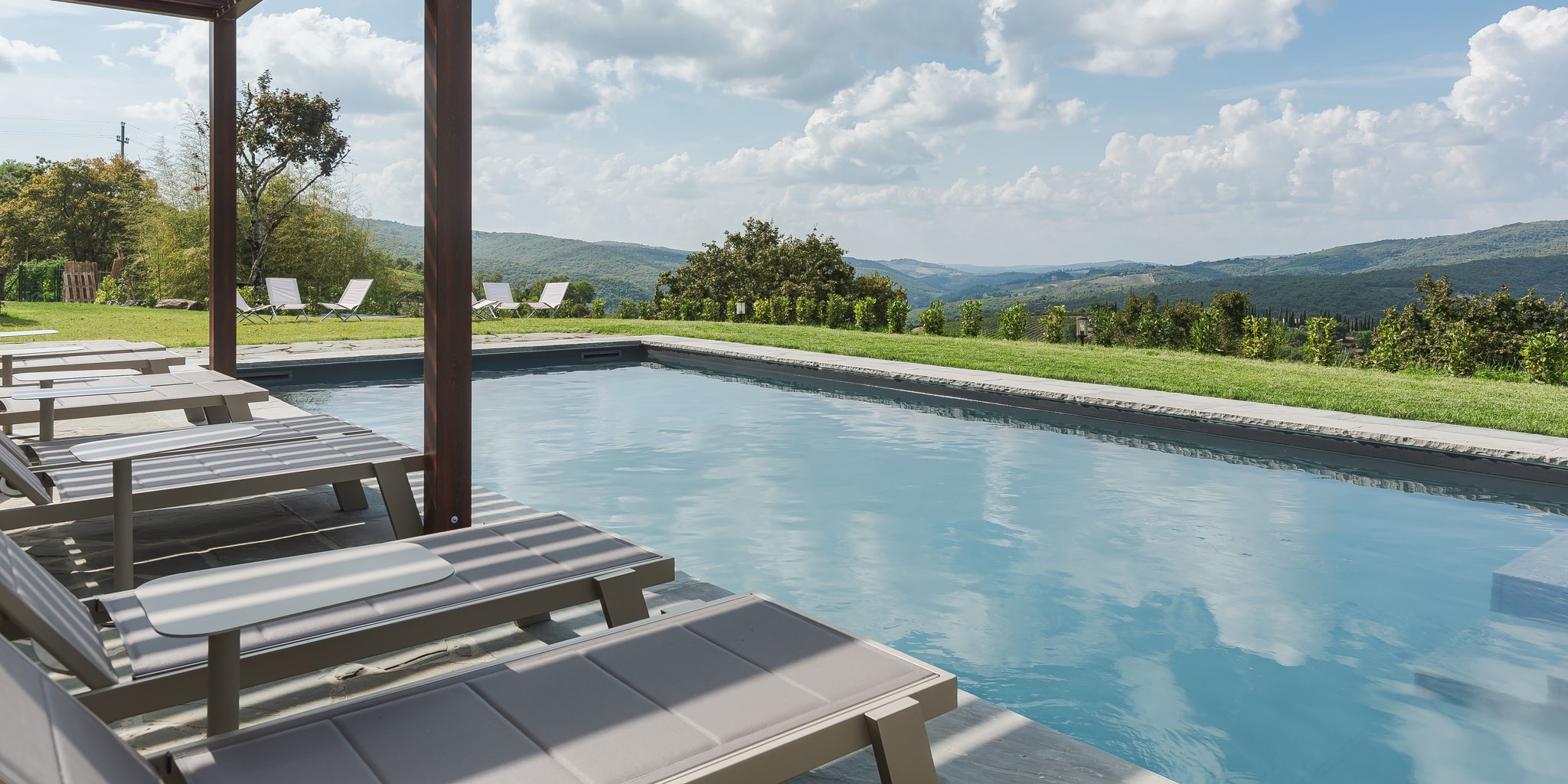
Where the Hills Meet the Water
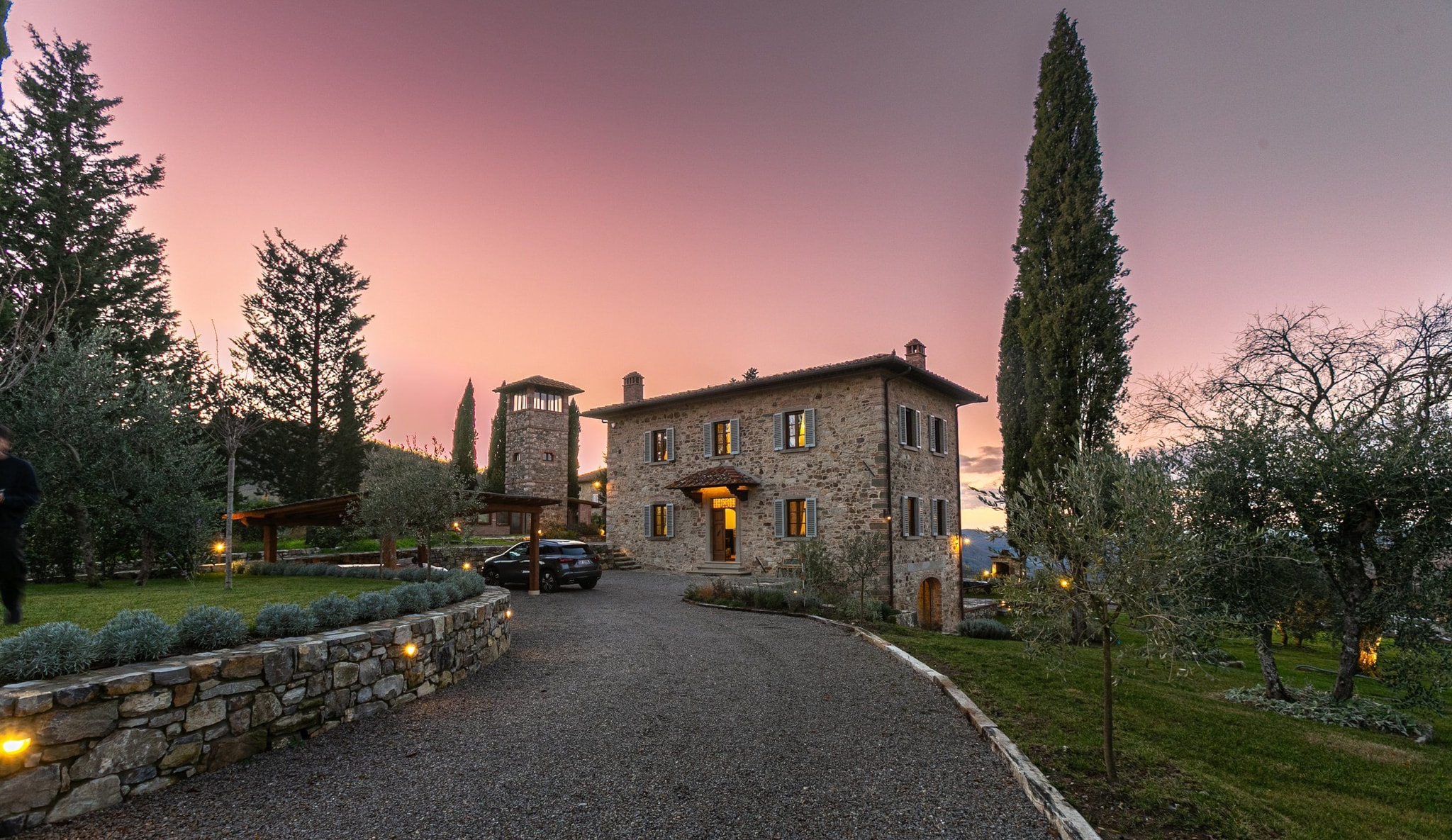
Painters have followed this light for generations. From the upper terrace the valley turns at dusk, terracotta to gold, the far hills to violet. The sky can turn pink in the warmer months, deep blue in winter. Here it is yours, the same each evening and never quite the same twice.
On 24 September 1716, Grand Duke Cosimo III de' Medici signed the decree that delimited Chianti Classico, among the first legally defined wine regions in the world. The boundaries still hold.
Radda sits at 530 metres, among the highest ground in the zone, where the wines are leaner and more particular. The Black Rooster traces to a medieval contest between Florence and Siena: the Florentines starved their rooster so it would crow before dawn, their rider set out early, and the border fell twelve kilometres from Siena. Vasari painted the story on the ceiling of the Salone dei Cinquecento. DOCG since 1984, Gran Selezione since 2014.
“The villa itself is beautiful, with a fresh elegant atmosphere throughout. The views are absolutely spectacular, something that truly needs to be experienced in person.”
“Radda is a short walk from the villa, and we visited once or twice each day. The townspeople are so friendly and welcoming, and they all know Brandon and his family.”
“A very magical place to visit. We had a fabulous time with amazing family memories.”
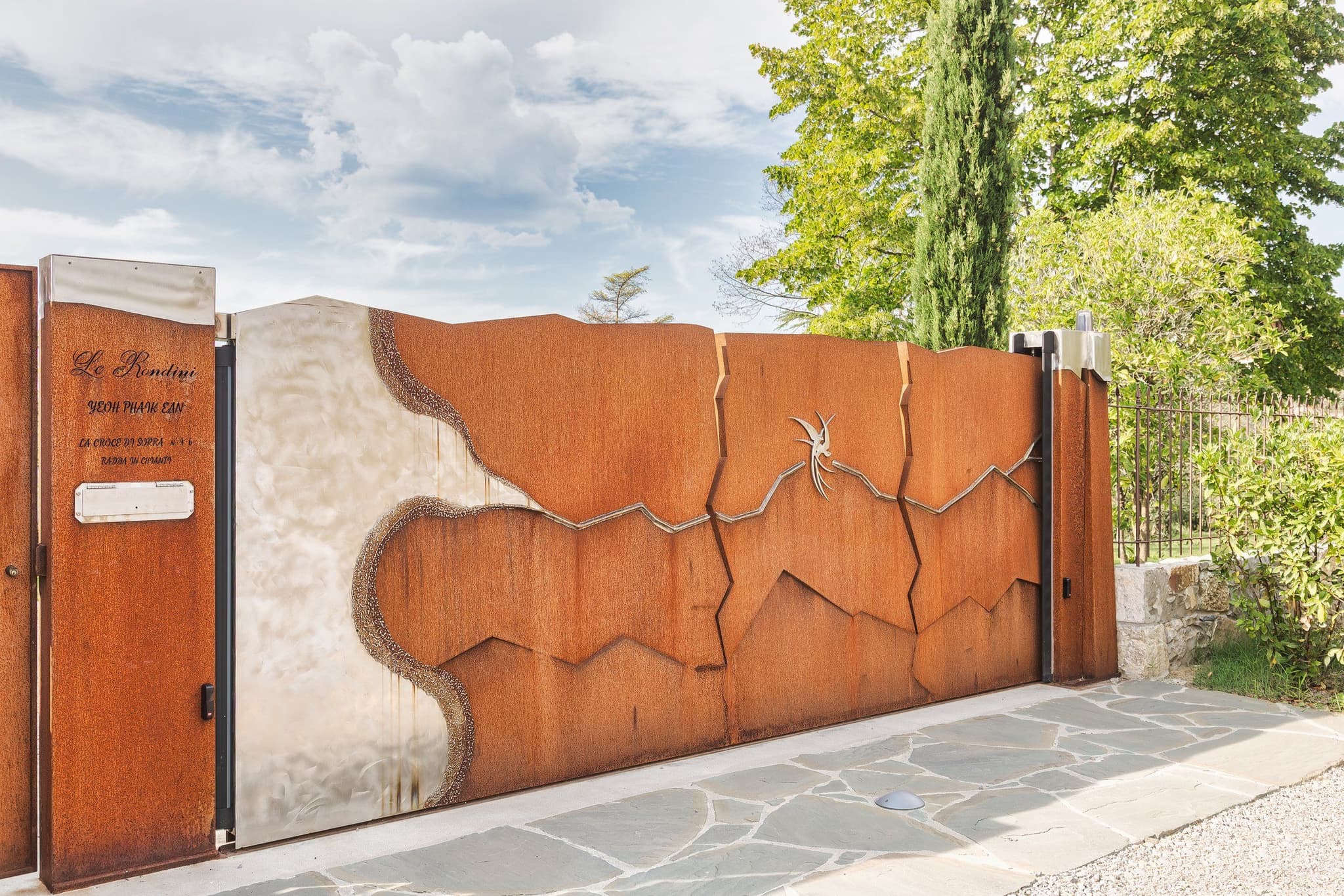
Begin Your Stay
Le Rondini welcomes a limited number of guests each year.
This is not a reservation. It is an introduction.